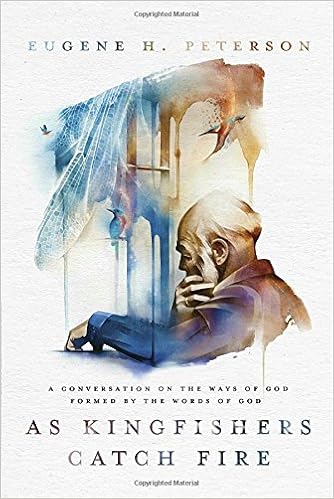
The regular printing of sermons is something that was
commonplace in Civil War days and in the early 20th century, but
rarely do we now find sermons in printed form that are deep with wisdom and
interesting also. One notable exception
to this truth is the new book of sermons entitled As Kingfishers Catch Fire by
Eugene Peterson, author of the Message.
While much is praised about Peterson’s work on ministry and spiritual
theology, these edited sermons bring the best of his deep knowledge of
Scripture and love of God to the foreground.
In fact, after reading the book one can imagine Eugene as a scholar and
a poet, who fuses the loftiness of scholarship with the real needs of the
people.
In writing about the relationship between Balaam and Balak
in the OT, Peterson brings us to the fountain of humor. He writes, “Hilarity is integral to Christian
pilgrimage. There is no question that
being a Christian involves us in many sorrows, many struggles, sober hours of
repentance and meditation. But there isn’t
the slightest suggestion in Scripture that grim resignation is characteristic
of Christian character.” (47) The Stoic
stiff upper lip is not part of the life of the believer, but a firm resolve to
see humor in many events. The story of
the talking donkey and the irony that when he spoke it was blessing and not
curses, confounded his master who tasked him speaking curses. Peterson gives us a reason to see hilarity in
the Bible as a sign of God’s creative hand behind all things.
After examining the powerful words given to Isaiah in the
events surrounding Isaiah 6, Peterson brings us to face the impact of the word
of God and listening to God’s word. He
writes, “God speaks to us. The word of
God is at the center of our worship. God
speaks to us in Scripture, in sermon, and in sacrament. It is the same word each time. Will we be God’s people and do his
bidding? Will we embrace his gifts and
participate in his saving work?” (123)
We only find wholeness in our dialogue with the Lord. I think it is also powerful that Eugene
includes the sermon and the Sacrament, because God’s word is made visible in
the elements of the Lord Supper, but also applied directly to us in the
sermon. God meets us and uses us as he
speaks his word to us, often in command, promise, and blessing, even in
questions.
Thanks to Blogging for Books for the copy of this book in
exchange for an honest review.

Comments
Post a Comment