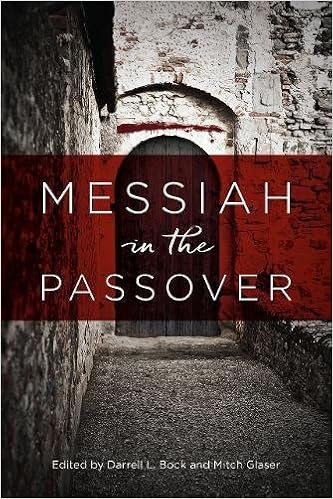
The Messiah in the
Passover, Edited by Darrell Bock and Mitch Glaser
Why should Christians celebrate and remember the
Passover? This is a striking question
that needs to be understood as well as the historical and theological context
of the Passover. However obscure we
sometimes view the Old Testament, there is some significant reasons why we
should reach back and study the Passover.
Mitch Glaser in the Introduction states, “When Christians celebrate the
Passover, they grow in their understanding of the Old Testament, affirm the
Jewishness of the Gospel, deepen our understanding of the Lord’s Supper, and
build community with fellow Christians…” (20).
This book is answer to why celebrate the Passover but even more
importantly an answer to what the Passover is and what it signifies to us
today. The various contributors of this
book, Messiah in the Passover, bring a wealth of ministry experience in
relating the Jewishness of both Jesus and the Old Testament to their Christian
faith.
Any good understanding of the Passover will inevitably be an
examination of the first five books of the Bible, particularly the narrative in
Exodus. Robert Walter zeroes on some key
concepts about Exodus 6 by looking at the concept of promise in the
passage. He writes, “The third promise
is that God will redeem Israel. The
Hebrew verb ga’al used here can carry
the sense of repurchasing something that once belonged to you. It points to a transaction between two
parties where the purchaser pays a price, and as a result takes ownership. Likewise, through the Passover, God will pay
a price (Lamb)to repurchase Israel, his firstborn from slavery, taking
ownership and possession of his people and bringing them into the Land.”
(35) The buying back of that which was
lost and now is one’s own is particularly powerful because it points to a God
who is not willing to discard something that sinned, no matter how bad the
action. Further, the promise points to
an overarching theme of the Passover, that God will make good on his promises,
even at great cost to Him.
Brilliantly, Walter continues in his examination of the
biblical material to draw significant parallels between Joseph and Jesus. He writes, “Joseph’s words of hope find fulfillment
through the blood of the lamb at Passover as Israel is set free from Egypt…The
New Testament’s words of hope find fulfillment through the blood of Yeshua our
Passover Lamb…” These poignant
connections between Joseph and Jesus give us confidence that God is working for
his people in most extraordinary ways (Joseph from barely alive to leader of a
nation, Jesus from despised and suffering servant to victor). These words of hope are not vain wishful
thinking but rooted in God’s historical actions, and this is accounted for both
in Exodus and in the New Testament.
This was a very good book relating the Passover to the
present day Christians, helping us with a fuller understanding of the
importance of Passover.
Thanks to Kregel Publications for the copy of this book in
exchange for an honest review.

Comments
Post a Comment