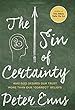
The
Sin of Certainty: Why God Desires Our Trust More Than Our “Correct” Beliefs by
Peter Enns
Does our faith in God require us to rally the troops
around our mental fortress and not allow any uh-oh moments to creep in? Has our correct thinking about God, the
Bible, and faith pushed us away from interacting from the messiness of the God
we see in the pages of Scripture? These
are just a few of the questions that Dr. Peter Enns wrestles with in his new
book, The Sin of Certainty. Not an exercise in academia, but rather some
ponderings on his own faith journey and his getting in a wrestling match with
his own preconditioned ideas about God and the Bible, Enns offers a way forward
for the weary. Many will be furious in
these pages about his views on the Old Testament, the Bible, and the Psalms,
but many will find a breath of fresh air to his sensitivity to the text and to
those following after God.
Peter states early on in the book, “Sooner or later we
all find ourselves faced with some serious challenge to how we think about
God. Don’t we all eventually come to a
crossroads where familiar beliefs don’t work very well and we just don’t really
know what to believe anymore? (9-10)” Enns points out that these “uh-oh”
moments are actually seasons or moments that cause us to reframe our firmly
entrenched views about truth and certainty.
“What do you really believe, Pete, when no one is telling you what to
believe? Who is God for you? What familiar road map are you willing to
leave behind, were a few of the questions he was asking (14). Yet, for him, this process took courage,
takes courage, and will take trust in God along the way. Often, we don’t really examine our beliefs
because we have inherited them from our theological and church forefathers.
Enns assaults the concept of right thoughts being the
guiding principle in Christian faith. “When
trusting God is central – even just the simple act of trying to trust when we
might not feel like it – we are walking a holy path,” writes Enns (21). Peter makes the careful distinction that it
is not the beliefs themselves that are the problem but our pursuit and
crystallization of these beliefs that remain the issue. It is possible to have mistaken beliefs about
a person, but trusting and committing to care for that person is fundamental to
a healthy and long relationship.
Although I certainly agree that Christian faith is trusting in God, a
personal being (22), beliefs and their truth are also part of the
framework. Often, even our trust in
someone or in God is misguided because we have a limited amount of knowledge
about them, and with a more robust knowledge comes a greater opportunity to
trust.
In one of the chapters on the Psalms, particularly Psalm
73, Peter notes that, “The issue for the psalmist isn’t the mere fact that the
wicked prosper. What sends him into
crisis mode is that God is letting the
wicked prosper when God had clearly laid down the law that the righteous
will prosper and the wicked will be punished (67).” This is unsettling for many readers,
especially as the psalter opens up in Psalm 1 with the prospering of the
righteous and the driving away of the wicked.
Yet, the world gets in the way of our certainty of what we think God
will do, God cannot be micromanaged as if in a box. Even the perceived idea that God isn’t
following through on the rules, “the psalmist enters the sanctuary; he moves toward
God, not away from God – a movement to
trust when all the evidence is against it (70).” Herein lies the beauty of this book, for all
the trouble Enns stirs up, he is not raising the banner of jolting from the
pews, but is calling us to move toward God, trusting him even when reality is
downright messed up.
There is plenty to disagree with in the book, much that
evangelicals will sneer at, but at the heart of it, this book is not about
pushing people away from the floorboards of cherished beliefs, but asking them
to consider how doubt, uneasiness, and certainty might be seen in light of the
messiness of reality and the Bible.
Thanks to HarperOne for the copy of this book in
exchange for an honest review.

Comments
Post a Comment